Can Green Energy Really Challenge the Petrochemical Industry?
Green energy may not replace petrochemicals, but it could transform how they are produced. Discover how renewables, green hydrogen, recycling and alternative feedstocks are reshaping the industry.
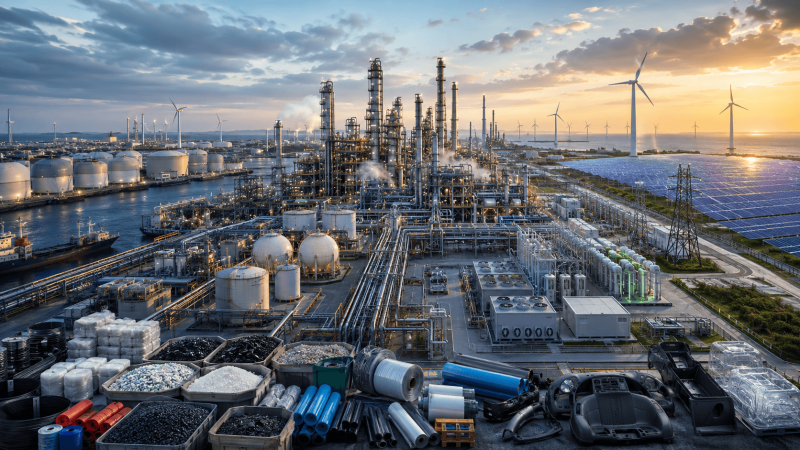
The global energy transition is accelerating. Solar and wind capacity is expanding, electric vehicles are replacing part of the demand for conventional transport fuels, and governments and industries are investing heavily in renewable electricity, green hydrogen, recycling and lower-carbon manufacturing.
This raises an important question for one of the world's largest industrial sectors:
If the world moves away from fossil fuels, what happens to petrochemicals?
At first glance, the answer appears straightforward. Petrochemicals are predominantly produced from fossil feedstocks, so replacing oil and gas with renewable energy should eventually weaken the industry.
The reality is considerably more complicated.
Green energy can challenge how petrochemicals are produced, and alternative feedstocks can gradually challenge what they are produced from. But replacing the petrochemical products themselves is much harder.
That distinction could define the future of the industry.
Burning Oil and Using Oil Are Two Different Things
One of the biggest misconceptions surrounding the energy transition is that reducing fossil-fuel consumption automatically means eliminating petroleum from the economy.
There is an important difference between using oil as an energy source and using hydrocarbons as a chemical feedstock.
When gasoline or diesel is burned, the primary objective is energy.
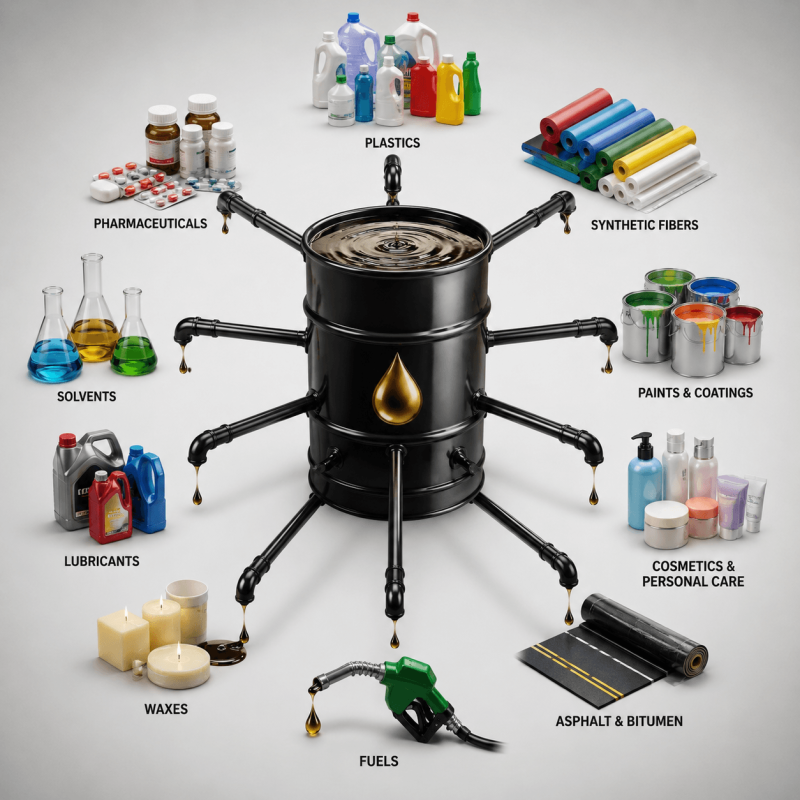
When hydrocarbons are converted into ethylene, propylene, polymers and other chemicals, their molecules become part of physical materials.
Those materials eventually appear in products ranging from packaging and pipes to insulation, synthetic textiles, automotive components and electrical equipment.
This makes petrochemicals fundamentally different from many traditional petroleum markets.
An electric vehicle can replace gasoline consumption.
A solar farm can reduce the need to burn fossil fuels for electricity.
But neither automatically replaces the polymers, coatings, insulation, synthetic rubber and other engineered materials required by modern manufacturing.
Green Energy Is Already Challenging Oil — But Not Equally Everywhere
Electrification presents a significant structural challenge to petroleum demand in transportation.
Electric vehicles eliminate direct gasoline or diesel consumption during operation. Renewable electricity can similarly displace fossil fuels from power generation, while efficiency improvements reduce energy requirements across buildings and industry.
The effect on petrochemical feedstocks is different.
As transportation becomes increasingly electrified, petrochemicals could represent a more strategically important component of remaining petroleum demand.
The reason is simple: replacing the energy provided by oil is generally easier than replacing the carbon molecules contained in manufactured materials.
This creates an unusual situation in which the energy transition can weaken one part of the petroleum value chain while increasing the relative importance of another.
The Green Economy Still Needs Petrochemicals
There is another apparent contradiction.
Many technologies designed to reduce fossil-fuel consumption themselves require petrochemical-derived materials.
Electric vehicles contain plastics, synthetic rubber, insulation, adhesives, coatings and numerous polymer components.
Wind turbines use composite materials, resins, coatings, lubricants and cable insulation.
Solar-energy systems require polymers, encapsulation materials, electrical insulation and other chemical products.
Modern electrical grids require enormous quantities of insulated cables, protective coatings and engineered materials.
Energy-efficient buildings depend heavily on insulation.
Petrochemicals therefore do not simply compete against the green economy.
They are also embedded inside it.
A world building millions of electric vehicles, renewable-energy installations and upgraded electricity networks still requires enormous quantities of industrial materials.
The transition away from fossil fuels as energy sources does not automatically mean a transition away from petrochemical materials.
Where Green Energy Can Transform Petrochemicals
The more immediate disruption may occur inside petrochemical plants themselves.
Petrochemical production requires substantial amounts of energy, including high-temperature heat. Traditionally, much of that energy has been supplied by fossil fuels.
Renewable electricity creates an opportunity to reduce those emissions.
One important area of development is the electrification of steam crackers.
Steam crackers are among the most important pieces of equipment in the petrochemical industry, producing basic chemicals such as ethylene and propylene from hydrocarbon feedstocks.
Conventional crackers require extremely high temperatures and are significant energy consumers.
Electrically heated cracking technology could allow renewable electricity to provide part of that heat instead.
In this scenario, renewable energy does not destroy the petrochemical industry.
It changes the technology used to operate it.
Green Hydrogen Could Be Even More Disruptive
Hydrogen represents another major connection between renewable energy and chemicals.
Hydrogen is already an important industrial input, but much of today's production relies on fossil fuels.
Renewable electricity can instead power electrolysers that split water into hydrogen and oxygen, creating what is commonly called green or renewable hydrogen.
The implications are particularly significant for chemicals such as ammonia and methanol.
Conventional ammonia production relies heavily on fossil-based hydrogen. Replacing that hydrogen with renewable hydrogen could substantially reduce the fossil dependence of the production process.
Methanol presents another opportunity. Renewable hydrogen combined with a suitable carbon source can potentially produce e-methanol, while biomass can provide pathways toward biomethanol.
The chemical may remain the same.
The production route changes.
That distinction is crucial.
Could Oil Itself Be Replaced as the Feedstock?
This is the harder challenge.
Using renewable electricity to power industrial equipment addresses the energy required for petrochemical production.
It does not automatically replace the carbon feedstock required to manufacture hydrocarbons and polymers.
Alternative carbon sources are therefore being developed.
Potential pathways include:
Biomass
Biological materials can provide renewable carbon that can be processed into chemicals and polymers.
Recycled materials
Mechanical and chemical recycling can return existing plastics and other materials into the production cycle, reducing demand for virgin fossil feedstocks.
Captured CO₂
Carbon dioxide combined with renewable hydrogen can potentially become a feedstock for synthetic chemicals and hydrocarbons.
Bio-based polymers
Some conventional petrochemical materials can potentially be substituted with polymers derived partly or entirely from renewable biological resources.
Each pathway has potential.
None currently offers a simple, inexpensive and universally scalable replacement for the enormous global fossil-based petrochemical system.
Recycling May Be a Bigger Threat Than Renewable Electricity
For conventional petrochemical producers, one of the most important competitive pressures may ultimately come not from solar panels or wind turbines directly, but from the circular economy.
Consider polyethylene.
In a traditional linear model:
Fossil Feedstock → Ethylene → Polyethylene → Product → Waste
A more circular model attempts to create:
Polyethylene → Product → Collection → Recycling → New Polyethylene Product
Every tonne of material successfully returned to productive use can potentially reduce the requirement for virgin feedstock.
Mechanical recycling is already commercially established for many applications, although contamination, degradation, collection systems and economics impose limitations.
Chemical recycling aims to go further by converting waste plastics into chemical or hydrocarbon feedstocks that can re-enter production processes.
If these technologies become significantly cheaper and scalable, they could change the economics of virgin petrochemical production.
Cost Remains the Deciding Factor
Technology alone does not determine commodity markets.
Economics does.
Fossil-based petrochemical production benefits from decades of infrastructure development, enormous production scale, integrated refinery and petrochemical complexes, established logistics networks and highly optimized manufacturing processes.
Many alternative production pathways remain more expensive.
Renewable hydrogen, synthetic hydrocarbons, carbon capture and utilization, advanced recycling and bio-based feedstocks all face combinations of cost, infrastructure, energy availability and scalability challenges.
For green alternatives to take substantial market share, they must eventually compete not only environmentally but commercially.
A technology that works in a demonstration plant is not necessarily ready to supply hundreds of millions of tonnes of global commodity demand.
Emerging Markets Change the Equation
The future of petrochemicals will also not be determined solely by Europe and other mature economies.
Population growth, urbanization, infrastructure investment, manufacturing expansion and rising living standards across emerging markets continue to generate demand for plastics and industrial materials.
Construction requires pipes, insulation, coatings and synthetic materials.
Growing food systems require packaging and agricultural materials.
Expanding transportation networks require tires, polymers and engineered components.
Manufacturing requires resins, solvents, chemicals and plastics.
As developing economies industrialize, material consumption can increase even while richer economies attempt to reduce waste and improve recycling.
This creates opposing forces within the same global market.
The Industry Is More Likely to Transform Than Disappear
The strongest conclusion is therefore not that green energy will defeat petrochemicals.
It is that green energy will force the petrochemical industry to evolve.
The industry of the future could increasingly combine:
- Renewable electricity
- Electrified industrial processes
- Green hydrogen
- Recycled feedstocks
- Bio-based carbon
- Captured CO₂
- More efficient production technologies
- Conventional hydrocarbon feedstocks where alternatives remain uneconomic
Instead of a simple transition from “petrochemicals” to “green materials,” the world may develop a more diversified chemical-production system.
The competitive question will increasingly become not simply who can produce the most, but who can produce efficiently, reliably and with the lowest carbon intensity.
Green Energy vs Petrochemicals Is the Wrong Question
Green energy and petrochemicals are often presented as opposing industries.
That interpretation misses the deeper transformation taking place.
Renewable energy can replace fossil fuels used for electricity, transportation and industrial heat. It can also provide the electricity needed for green hydrogen and potentially for new chemical-production technologies.
But modern economies still require carbon-based materials.
The real challenge is therefore not necessarily eliminating petrochemicals.
It is decoupling petrochemical production from its traditional dependence on fossil energy and virgin fossil feedstocks.
That transition will take time.
In the near future, conventional petrochemicals are likely to remain deeply embedded in global manufacturing, construction, agriculture, transportation and even renewable-energy infrastructure.
Green energy will challenge the petrochemical industry.
But rather than simply replacing it, the more likely outcome is that it will reshape how the industry produces the materials the world continues to demand.
For companies operating across international petrochemical and industrial commodity markets, this transformation creates both risks and opportunities. Producers, traders and buyers that understand the changing relationship between hydrocarbons, renewable energy, recycling and alternative feedstocks will be better positioned for the next phase of the global materials economy.