From Oil Field to Smartphone: The Invisible Supply Chain Behind Everyday Products
Explore the hidden journey from oil, gas and metals to smartphones, revealing how petrochemicals, polymers, chemicals, copper, aluminium and steel connect the industrial supply chains behind modern technology.
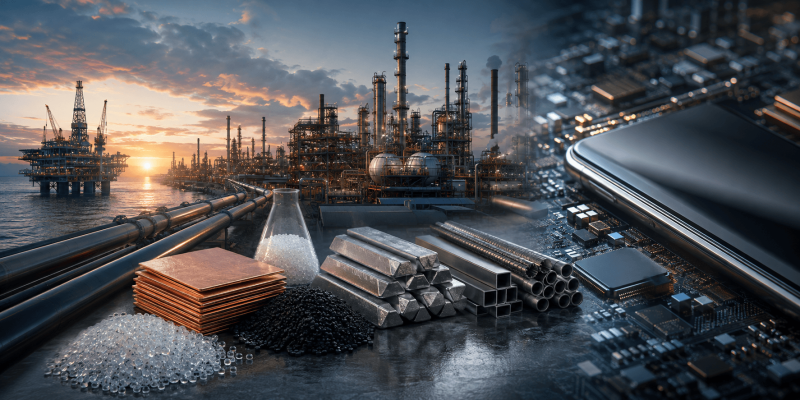
From Oil Field to Smartphone: The Invisible Supply Chain Behind Everyday Products
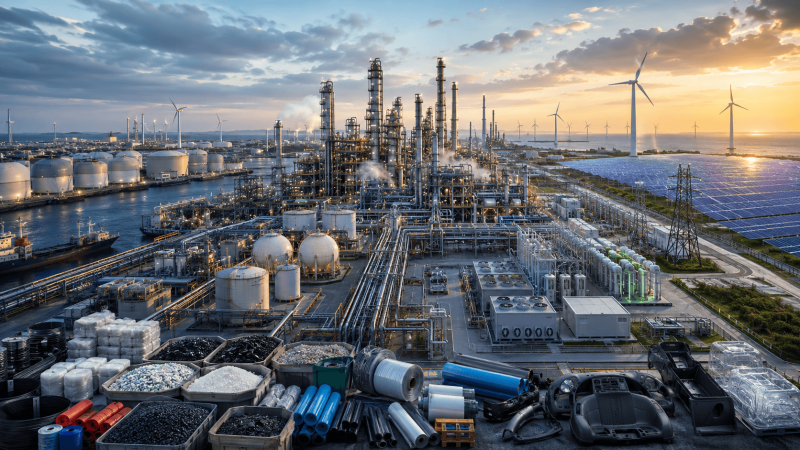
A smartphone feels like the ultimate high-tech product. Its processor contains billions of microscopic transistors, its display responds instantly to touch, and a device small enough to fit in a pocket can connect to communication networks on the other side of the world. Yet behind this sophisticated technology lies a much older industrial foundation: oil and gas fields, petrochemical plants, chemical facilities, metal smelters, steel mills, refineries, mines, ports, pipelines and global commodity supply chains.
Long before a smartphone reaches an electronics factory, industries producing hydrocarbons, petrochemicals, polymers, industrial chemicals and metals have already contributed to the physical and industrial ecosystem required to manufacture it.
Understanding this connection reveals something important about modern industry: raw materials and advanced technologies are not separate worlds. They are different stages of the same global value chain.
The Journey Begins Far Upstream
For part of the material chain, the story begins underground.
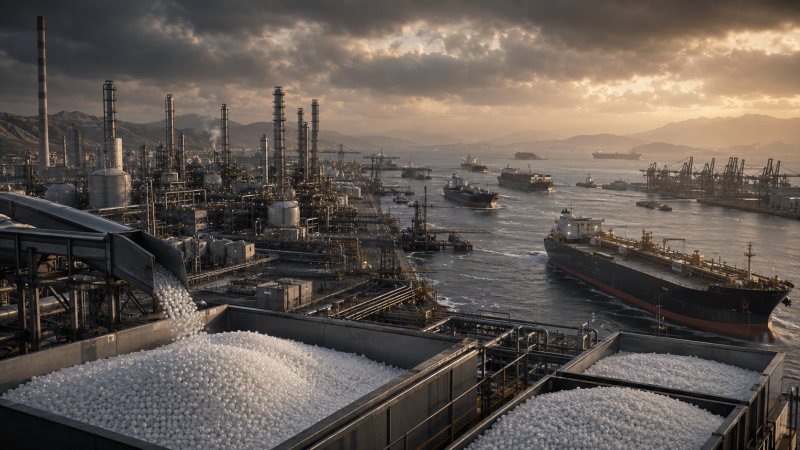
Crude oil and natural gas are extracted, processed and separated into streams that can become fuels, industrial feedstocks or raw materials for petrochemical production. Refineries and petrochemical complexes transform hydrocarbon feedstocks into increasingly specialized products.
Among the most important building blocks of the petrochemical industry are olefins such as ethylene and propylene and aromatics such as benzene, toluene and xylenes. These molecules sit near the beginning of enormous downstream manufacturing chains.
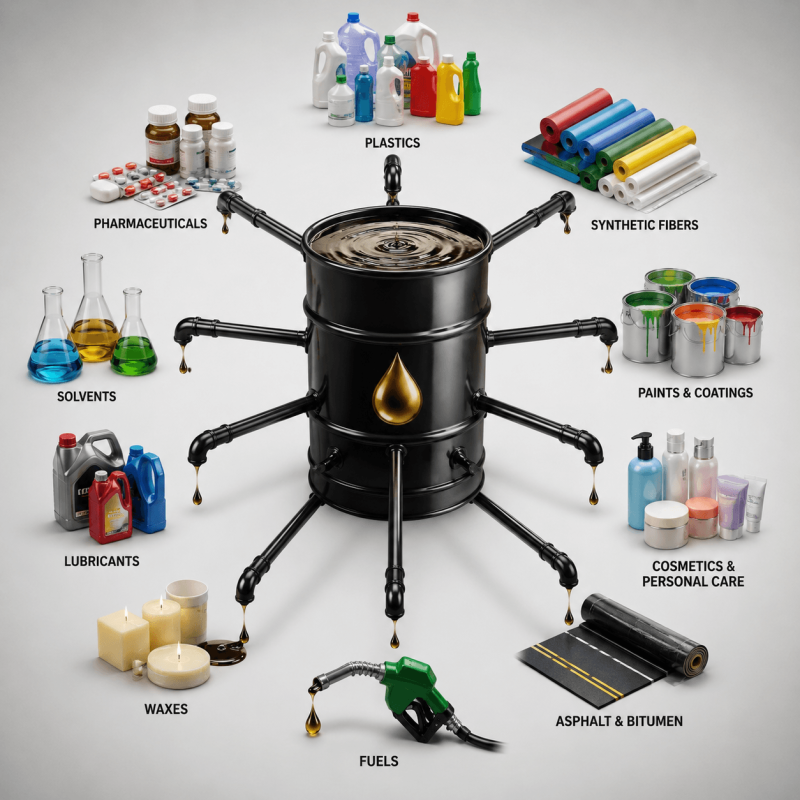
Ethylene, for example, can ultimately become polyethylene. Propylene is the principal feedstock for polypropylene. Other petrochemical pathways lead to synthetic rubbers, solvents, coatings, adhesives, resins, fibres and numerous specialty chemicals.
This is where the connection between an oil or gas field and modern consumer technology starts becoming visible.
The International Energy Agency has described petrochemicals as an increasingly important component of global oil demand because petrochemical feedstocks are converted into products that surround modern life. Rather than simply being burned for energy, hydrocarbon molecules can become the physical materials incorporated into manufactured products and industrial systems.
From Petrochemicals to Polymers
Look inside almost any electronic device and polymers appear everywhere.
Smartphones require materials that combine low weight, electrical insulation, mechanical strength, chemical resistance and manufacturing flexibility. Different polymer families and engineered plastics can therefore be found throughout the wider electronics value chain—in components, insulation, connectors, protective structures, manufacturing equipment and packaging.
Polyethylene, polypropylene and other polymer families begin with chemical feedstocks produced much further upstream. Those basic polymers can then be compounded with additives, stabilizers, fillers or other materials to create products with specific properties.
This transformation demonstrates how dramatically value chains can evolve. A hydrocarbon molecule originating in a gas-processing or refining operation can pass through cracking, chemical conversion, polymerization, compounding and component manufacturing before becoming part of an advanced industrial or consumer product.
The final device may carry the name of a technology company, but behind it stands an extensive network of chemical producers and raw-material suppliers.
Chemicals Behind the Microchip
The relationship becomes even more interesting when we examine semiconductor manufacturing.
The microprocessor inside a smartphone is manufactured using extraordinarily precise processes. Semiconductor fabrication involves repeated stages including deposition, lithography, etching, cleaning, ion implantation and packaging. According to the Semiconductor Industry Association, chip manufacturing depends on hundreds of specialized manufacturing tools as well as hundreds of specialty and high-purity gases, chemicals, metals and substrates.
Chemistry is therefore fundamental to digital technology.
Modern semiconductor facilities use highly controlled chemical processes to build microscopic structures on silicon wafers. The U.S. Environmental Protection Agency notes, for example, that semiconductor manufacturing uses specialized fluorinated compounds for processes including circuit-pattern creation and the cleaning of chemical-vapor-deposition equipment.
The connection is not necessarily that a standard bulk industrial chemical is poured directly into a smartphone factory. Semiconductor production frequently requires extremely high-purity and highly specialized materials. Instead, the important point is that the electronics industry sits downstream from a vast chemical ecosystem encompassing basic feedstocks, intermediates, specialty chemicals and ultra-high-purity electronic materials.
Without industrial chemistry, modern semiconductor manufacturing would not exist in its present form.
Copper: Carrying the Electrical World
Petrochemicals provide only one side of the story. The other major branch begins with metals.
Copper is fundamental to electrical systems because of its excellent electrical conductivity, making it an important material throughout electronics, electrical equipment, power distribution, telecommunications and industrial infrastructure.
Inside the broader electronics value chain, copper is used for conductive pathways, wiring, printed circuit boards, connectors and other electrical applications. Beyond the device itself, enormous quantities of conductive materials are required to build the systems that allow smartphones to function—from telecommunications equipment and power networks to charging infrastructure and data centres.
This distinction matters.
A smartphone is not useful simply because its components exist. It needs electricity, mobile networks, internet infrastructure, servers, data centres and global telecommunications systems. The material footprint of digital technology therefore extends far beyond the few hundred grams of material contained in the device in a user's hand.
Aluminium: Lightweight Strength for Modern Technology
Aluminium occupies another important position in this ecosystem.
Its combination of relatively low density, corrosion resistance, thermal characteristics and ability to be formed into complex shapes has made aluminium valuable across electronics, transportation, electrical engineering, construction and industrial equipment.
In consumer electronics, aluminium can be used in housings, frames, structural components and thermal-management applications depending on the product design. But, as with copper, its role extends well beyond an individual device.
Telecommunications infrastructure, electrical systems, buildings, transportation equipment and industrial machinery all depend on aluminium products in various forms.
The digital economy may appear increasingly virtual, but the infrastructure supporting it remains intensely physical.
Steel: The Structure Behind the Digital Economy
A smartphone itself is not primarily a steel product, but the industrial world required to produce and operate smartphones could not function at scale without steel.
The World Steel Association describes steel as one of the world's fundamental engineering and construction materials, with applications spanning buildings, vehicles, machinery, appliances, ships and infrastructure.
Consider what surrounds the smartphone supply chain.
Raw materials have to be extracted. Processing plants have to be constructed. Petrochemical facilities require pressure vessels, pipelines and structural equipment. Metals need to be processed and transported. Electronics factories require industrial machinery. Products must move through ports, warehouses, ships, trucks and distribution centres.
Then there is the infrastructure of the digital economy itself.
Telecommunication towers, industrial facilities and data centres require substantial structural systems. Worldsteel has specifically highlighted the role of steel in supporting data-centre infrastructure, demonstrating that even apparently "cloud-based" services ultimately depend on physical construction materials.
Every photograph uploaded, video streamed or message sent from a smartphone eventually interacts with physical infrastructure somewhere.
The cloud still has a foundation.
One Smartphone, Multiple Industrial Supply Chains
The smartphone therefore represents the convergence of several enormous industrial systems.
One branch begins with oil and natural gas and moves through refining and petrochemical processing toward chemical intermediates, polymers, resins, solvents and specialized materials.
Another begins with mineral resources and moves through mining, concentration, smelting, refining and metal processing to produce copper, aluminium, iron and steel products.
A third involves silicon and other materials required for semiconductor manufacturing.
These branches eventually converge through thousands of manufacturers and suppliers producing semiconductors, printed circuit boards, displays, batteries, connectors, structural components, cables, packaging and manufacturing equipment.
The supply chain is not a simple straight line from raw material to finished product. It is an interconnected industrial network.
The Infrastructure Between Producer and Consumer
There is another part of this story that receives less attention: logistics.
Raw materials rarely originate where final products are manufactured. Hydrocarbons may be produced in one country, converted into petrochemicals in another and processed into polymers elsewhere. Copper ore may cross borders before refining. Aluminium and steel products can travel thousands of kilometres before reaching fabrication facilities.
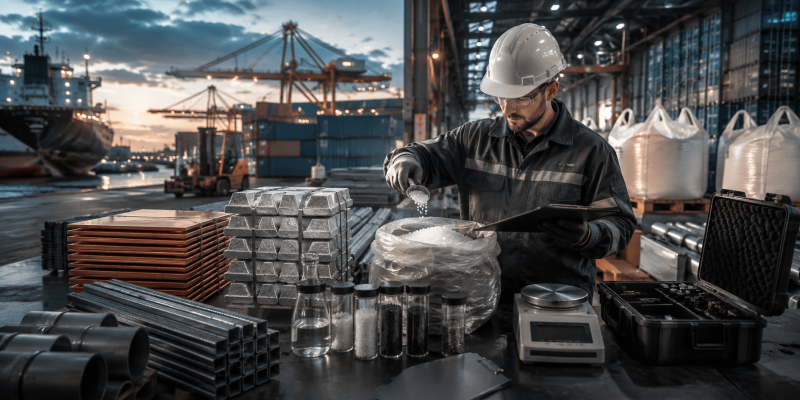
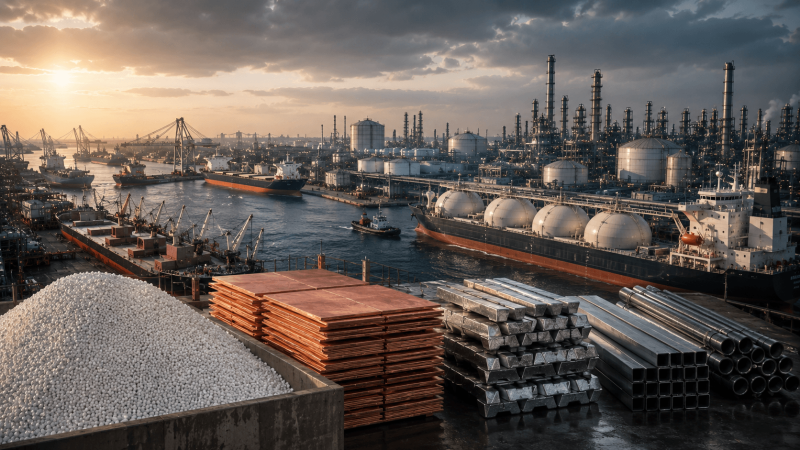
Commodity supply chains therefore depend on ports, bulk carriers, container vessels, terminals, warehouses, pipelines, road networks and trading companies capable of connecting producers with industrial buyers.
Commercial terms, quality specifications, inspection, documentation and delivery schedules become almost as important as the physical commodity itself.
A manufacturing plant cannot substitute a critical raw material merely because another grade is available somewhere in the world. It needs the correct specification, quantity, documentation and delivery at the required time.
This is why global commodity trading performs an important economic function: it connects geographically dispersed production with industrial demand.
Where Prime Petrochem Fits into the Picture
This interconnected industrial landscape explains why the portfolio of Prime Petrochem extends across multiple commodity categories.
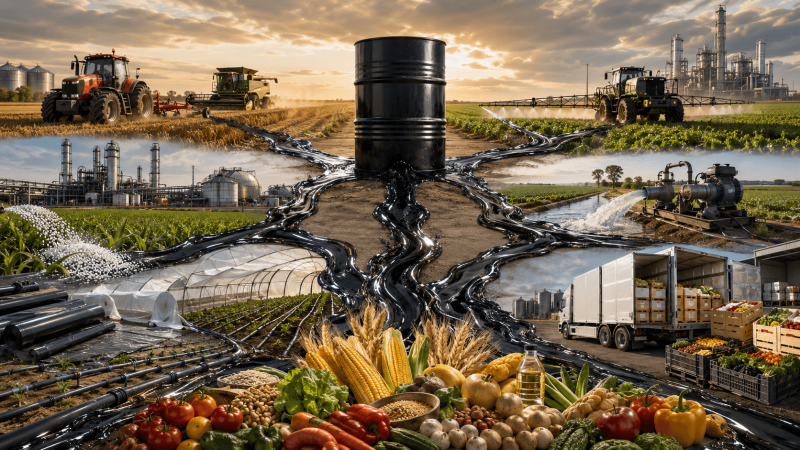
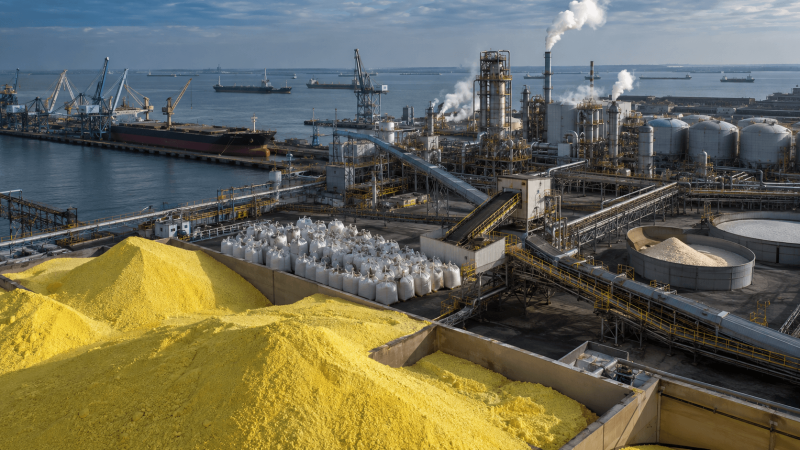
Petrochemicals and polymers represent the chemical-material branch of modern manufacturing. Energy products support transportation, industrial operations and processing. Sulphur and other industrial raw materials feed chemical and fertilizer value chains. Copper and aluminium connect directly with electrical, construction and manufacturing industries, while steel products provide the structural foundation for industrial and infrastructure development.
These categories may initially appear unrelated. In practice, they repeatedly meet further downstream.
A petrochemical facility needs steel infrastructure. A manufacturing plant needs energy and lubricants. Electrical systems need copper and aluminium. Polymer production depends on petrochemical feedstocks. Logistics infrastructure requires steel, fuels and industrial materials. Electronics manufacturing depends on metals, polymers and sophisticated chemical supply chains.
Prime Petrochem operates within these interconnected flows, supplying industrial commodities that move between producers, processors, manufacturers and markets.
The value is not simply in moving individual products. It lies in understanding how different commodity markets connect within the larger industrial system.
From Raw Materials to Modern Life
The smartphone is only one example.
The same exercise could be performed with an electric vehicle, solar panel, wind turbine, refrigerator, aircraft, hospital, data centre or modern apartment building. Each finished product represents the convergence of industries that most consumers rarely see.
Oil and gas become more than fuels. They become chemical feedstocks and materials.
Copper and aluminium become more than metals. They become electrical networks, components and infrastructure.
Iron and steel become more than construction commodities. They become factories, transportation systems, machinery and the physical framework of the global economy.
The more technologically advanced society becomes, the less visible many of these underlying materials appear to consumers. Yet advanced technology does not eliminate the need for industrial commodities. It reorganizes and often expands the networks through which those commodities create value.
The journey from an oil field, refinery, petrochemical complex, smelter or steel mill to a smartphone may involve thousands of kilometres and dozens of processing stages. But the connection is real.
Behind every digital product is a physical supply chain.
And behind that supply chain are the materials that make modern industry possible.