How Would Modern Agriculture Work Without Oil?
Modern agriculture relies on oil and gas for machinery, fertilizers, petrochemicals, irrigation, plastics and logistics. Discover what farming would look like without petroleum and how the global food system could adapt.
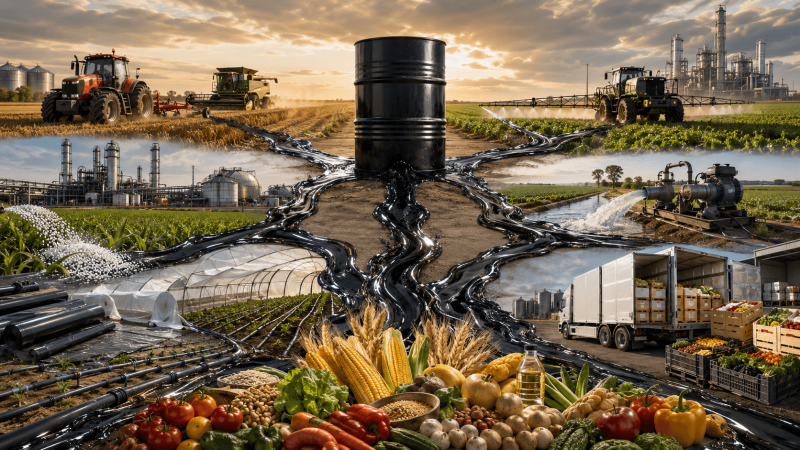
When we think about oil, we usually picture cars, airplanes, factories, or plastic products. We rarely picture a field of wheat, a greenhouse full of tomatoes, or the vegetables sitting on a supermarket shelf.
Yet modern agriculture is deeply connected to the oil, gas, petrochemical, and fertilizer industries.
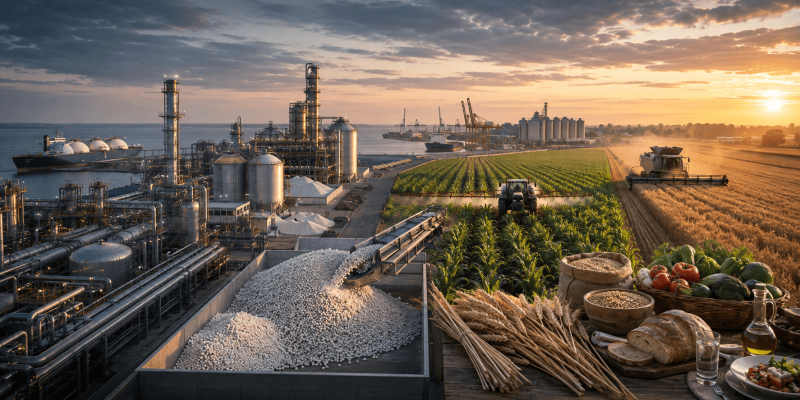
From the diesel powering a tractor to the plastic irrigation pipes carrying water across a field, hydrocarbons are embedded throughout agricultural supply chains. Fossil energy is used for farm machinery, fertilizer production, irrigation, pesticides, processing, transportation, and numerous agricultural materials. FAO has estimated that modern agriculture consumes substantial fossil energy, historically divided largely between machinery and fuel and fertilizer production.
This raises an interesting question:
What would happen if modern agriculture suddenly had to operate without oil?
The answer reveals just how closely the world's energy, chemical, fertilizer, and food systems are connected.
The Tractor Is Only the Beginning
The most obvious connection between oil and agriculture is machinery.
Modern farms rely on tractors, harvesters, combines, sprayers, loaders, generators, and other heavy equipment. Much of this machinery still runs on diesel.
Consider the journey of a field of wheat.
Before a single loaf of bread reaches a supermarket, machinery may be required to prepare the soil, plant the seeds, apply crop protection products, manage the field and harvest the grain. The wheat then has to be transported to storage facilities and mills before flour and finished food products move through another logistics network.
Remove petroleum fuels overnight and a large part of this highly mechanized system becomes considerably more difficult to operate.
Electrification, renewable fuels, hydrogen and autonomous agricultural technologies may eventually reduce this dependency. However, replacing the enormous global fleet of agricultural machinery would require infrastructure, investment and time.
And machinery is actually only one part of the story.
The Invisible Energy Behind Fertilizers
One of modern agriculture's most important connections to hydrocarbons is less visible: fertilizer.
Nitrogen is essential for plant growth, and modern agriculture depends heavily on synthetic nitrogen fertilizers to maintain high crop yields.
The industrial production of ammonia—the foundation for fertilizers such as urea and many other nitrogen products—requires large quantities of hydrogen. Today, natural gas remains a major feedstock and energy source for conventional ammonia production.
This means the relationship can effectively look like this:
Natural Gas → Ammonia → Nitrogen Fertilizer → Crops → Food
The importance of this connection becomes particularly obvious when energy markets are disrupted.
In 2026, for example, the IEA reported that disruptions involving natural gas, ammonia, urea and sulphur contributed to tightening fertilizer markets and rising production costs. The agency noted that even reductions in fertilizer use can negatively affect crop yields.
So an energy shock does not necessarily remain an energy problem.
It can become a fertilizer problem, then an agricultural problem, and ultimately a food-price problem.
Petrochemicals Are Already in the Field
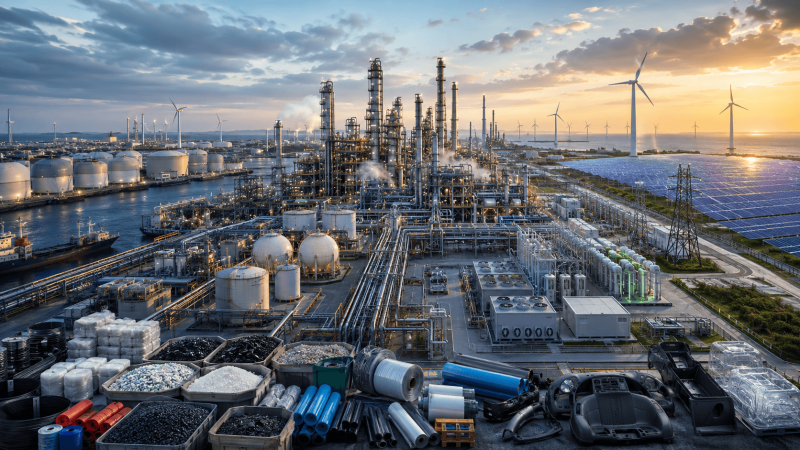
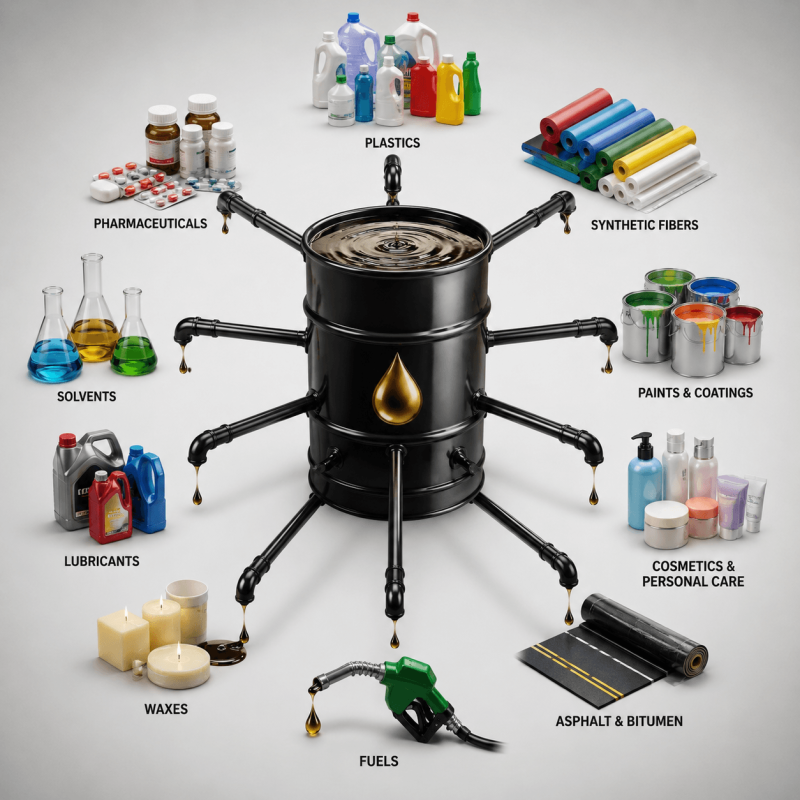
Oil and gas also reach agriculture through another route: petrochemicals.
Modern farms use enormous quantities of polymer-based materials.
Think about:
- greenhouse films;
- irrigation pipes and drip-irrigation systems;
- mulch films;
- seedling trays;
- fertilizer and seed coatings;
- silage films;
- protective nets;
- storage containers;
- agricultural packaging.
FAO describes plastics as an integral component of modern agriculture and notes that they can improve productivity, extend growing seasons, reduce water requirements and support more efficient use of agricultural inputs.
The scale is substantial. FAO has estimated that agricultural value chains use millions of tonnes of plastics annually, with additional tens of millions of tonnes used for food packaging.
Many of these materials originate from petroleum or natural-gas-derived petrochemical feedstocks.
The supply chain therefore extends further:
Oil & Gas → Petrochemicals → Polymers → Agricultural Materials → Food Production
Without these materials, agriculture would not disappear. Farmers cultivated crops for thousands of years before plastics existed.
But many modern high-productivity farming systems would have to operate very differently.
What About Pesticides and Crop Protection?
Crop protection provides another connection.
Modern agricultural systems use herbicides, insecticides, fungicides and other chemical products to protect crops from weeds, insects and disease.
Their manufacturing involves sophisticated chemical supply chains, some of which use petrochemical-derived feedstocks, solvents and intermediates. Energy is also required to manufacture, formulate, package and distribute these products.
Removing petroleum completely would therefore require not simply finding another fuel for tractors, but redesigning parts of the agricultural chemical industry as well.
Alternatives already exist—including biological crop protection, integrated pest management, precision application and other methods—but replacing existing systems globally would represent a major industrial transition.
Irrigation Has an Energy Problem Too
Agriculture does not only need soil, seeds and sunlight.
It needs water—and frequently energy to move that water.
Pumps transport water from wells, rivers, reservoirs and irrigation networks to agricultural land. Depending on the region, those pumps may operate using electricity or petroleum fuels.
Then there is the physical irrigation infrastructure itself.
Modern drip-irrigation systems commonly use polymer pipes, tubes, filters, connectors and storage components.
This produces another surprisingly long chain:
Energy → Water Pumping → Petrochemical Materials → Irrigation → Crops
Removing oil without simultaneously replacing the energy and materials supporting irrigation could therefore affect agricultural productivity, particularly in water-scarce regions.
From the Farm to Your Dinner Table
Even after the crop has been harvested, petroleum's job is far from finished.
Food must be collected, processed, refrigerated, packaged, stored and transported.
A tomato grown hundreds of kilometres from a city may travel by truck to a distribution centre, be placed inside polymer packaging, enter refrigerated storage, travel again to a supermarket and finally be driven to someone's home.
Modern food systems therefore depend not merely on agriculture, but on enormous logistics networks.
Oil connects many of these stages.
That is why major disruptions in energy markets can propagate far beyond petrol stations.
The domino effect can look like this:
Oil & Gas Disruption
↓
Higher Fuel and Petrochemical Costs
↓
Higher Fertilizer, Agricultural Input and Transportation Costs
↓
Higher Farming Costs
↓
Higher Food Production and Distribution Costs
↓
Higher Consumer Food Prices
The connection between energy and food security is therefore structural rather than accidental.
Could Agriculture Actually Survive Without Oil?
Yes—but not in its current form if oil disappeared suddenly.
Agriculture existed long before the petroleum industry. The relevant question is therefore not whether humans can grow food without oil.
Clearly, we can.
The real question is:
Could today's global agricultural system produce and distribute food at comparable scale, speed and cost without petroleum-derived fuels and materials?
Today, probably not without major disruption.
A gradual transition is a completely different proposition.
Electric agricultural machinery could replace some diesel consumption. Renewable electricity could power irrigation. Green hydrogen could provide feedstock for lower-carbon ammonia. Biological crop-protection technologies could reduce dependence on conventional chemicals. Recycling, alternative materials and biodegradable polymers could replace some agricultural plastics.
FAO itself emphasizes that agricultural plastics create serious environmental problems while also providing important productivity benefits; in many applications, viable and affordable alternatives are not yet available at sufficient scale.
The future is therefore unlikely to involve simply "switching off" petroleum.
It will involve reengineering the systems currently dependent on it.
The Barrel of Oil Hidden Inside Your Food
A barrel of oil never appears on the ingredient list of a loaf of bread.
But somewhere behind that bread may be a tractor powered by diesel, fertilizer produced through an energy-intensive chemical process, polymer irrigation equipment, crop-protection chemicals, plastic packaging and trucks carrying grain and finished products across hundreds or thousands of kilometres.
That is what makes modern commodity markets so interconnected.
Energy supports chemicals.
Chemicals support agriculture.
Agriculture supports food.
And food supports nearly eight billion people.
The next time you see crude oil prices moving, therefore, it is worth remembering that the consequences do not necessarily stop at the fuel pump.
Eventually, they can reach the farm—and from the farm, the dinner table.