Polymer Markets Under Pressure: How the Iran War Reshaped Global Petrochemical Supply
The 2026 Iran war disrupted petrochemical flows through Hormuz, tightening PE and PP supply, raising polymer prices and forcing global buyers to reconsider sourcing, logistics and supply-chain risk.
Strait of Hormuz Disruptions Expose the Vulnerability of Global PE and PP Supply Chains
The 2026 Iran war has demonstrated how quickly a geopolitical crisis can become a global petrochemical supply problem.
What began as a military conflict in the Middle East rapidly affected shipping through the Strait of Hormuz, disrupted the movement of crude oil and petrochemical feedstocks, constrained exports of finished petrochemical products and forced buyers in major importing markets to reconsider where their next cargoes would come from.
For the global polymer industry, the consequences have been particularly significant.
Polyethylene (PE) and polypropylene (PP) are among the world's most important commodity polymers. They are used across packaging, construction, automotive manufacturing, consumer goods, pipes, industrial products, household items and countless other applications.
The Middle East is also one of the world's most important production and export centres for these materials.
When transportation and production across the region came under pressure, the effects were therefore felt far beyond the Gulf.
The crisis has become a powerful reminder that polymer pricing is determined by much more than demand for plastic itself. Crude oil, natural gas, naphtha, petrochemical feedstocks, plant operating rates, shipping routes and geopolitics can all influence what a buyer ultimately pays for a tonne of polymer.
Why the Strait of Hormuz Matters to Petrochemicals
The Strait of Hormuz is normally discussed primarily in relation to crude oil and liquefied natural gas.
Its importance to the petrochemical industry receives considerably less public attention.
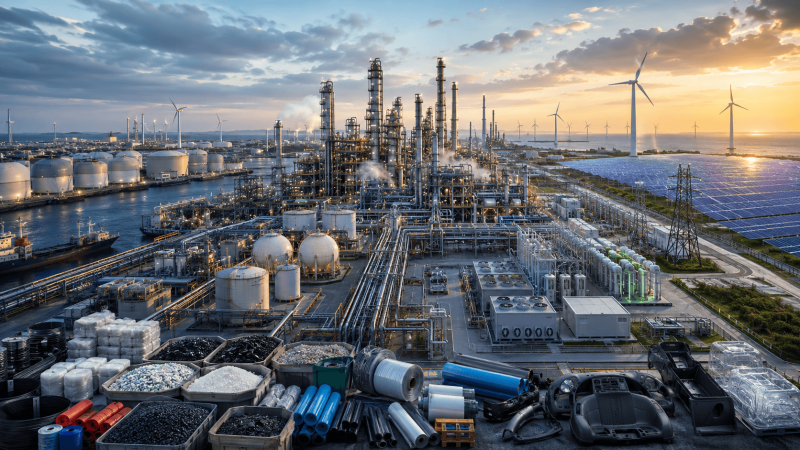
Yet the Gulf is home to some of the world's largest refining and petrochemical operations, producing feedstocks, chemicals and polymers for international markets.
According to figures cited by Reuters in March 2026, approximately $20 billion to $25 billion worth of petrochemical products normally pass through the Strait each year.
The Middle East accounted for more than 40% of global polyethylene exports in 2025, led by Saudi Arabia.
This creates substantial exposure.
A disruption in the Strait does not simply prevent oil tankers from following their normal routes. It can interfere with the movement of petrochemical feedstocks into manufacturing centres and prevent finished petrochemical products from reaching export markets.
For polymer buyers in Asia, Europe and elsewhere, that can rapidly translate into reduced availability.
The Problem Begins Before PE and PP Are Produced
To understand why polymer markets reacted so strongly, it is necessary to look upstream.
Polyethylene and polypropylene do not appear directly from crude oil.
They are produced through interconnected petrochemical value chains.
Polyethylene is produced from ethylene, while polypropylene is produced from propylene. Those monomers originate from petrochemical processing routes that can depend on feedstocks such as ethane, propane and naphtha.
Naphtha is particularly important for many Asian petrochemical producers.
Steam crackers process naphtha and other hydrocarbon feedstocks to produce building blocks including ethylene and propylene. Those molecules subsequently enter polymerization processes to produce PE and PP.
This creates a chain:
Crude oil and gas → petrochemical feedstocks → ethylene and propylene → PE and PP → manufactured products.
A serious disruption anywhere near the beginning of that chain can therefore influence material availability further downstream.
Naphtha Became a Critical Pressure Point
One of the most important consequences of the Hormuz disruption was pressure on naphtha supply.
Asia contains enormous petrochemical manufacturing capacity, but many facilities depend heavily on imported feedstocks.
When Middle Eastern naphtha flows were disrupted, Asian crackers faced procurement problems and higher feedstock costs.
Some petrochemical companies reduced operating rates. Others declared force majeure as raw-material supplies became increasingly difficult to secure.
The impact was already visible early in the conflict. Petrochemical producers in several Asian markets announced production adjustments or force majeure as Middle Eastern feedstock shipments were interrupted.
The issue therefore went beyond the loss of finished polymer exports from the Gulf.
The same disruption was also affecting manufacturers elsewhere that depended on Gulf feedstocks to produce petrochemicals locally.
One chokepoint was simultaneously affecting multiple levels of the supply chain.
Polyethylene Faces Particular Exposure
Polyethylene occupies an especially important position in this story because of the Middle East's large share of international PE exports.
PE is not one single product.
The polyethylene family includes major categories such as:
HDPE — High-Density Polyethylene
Used extensively in pipes, bottles, containers, industrial products and other applications requiring strength and chemical resistance.
LDPE — Low-Density Polyethylene
Commonly used in flexible packaging, films, coatings and other applications.
LLDPE — Linear Low-Density Polyethylene
Widely used for stretch films, packaging films, agricultural films and flexible plastic applications.
These materials move through global supply chains in enormous volumes.
When a major exporting region suddenly becomes less accessible, buyers cannot always replace those volumes immediately.
Different producers manufacture different grades. Customers may require specific melt flow rates, densities, mechanical properties, certifications or processing characteristics.
Replacing one supplier therefore involves more than simply finding another cargo labelled "polyethylene."
Polypropylene Is Feeling the Pressure Too
Polypropylene is another globally significant polymer affected by the disruption.
PP combines relatively low density with useful mechanical and chemical properties, making it important across packaging, automotive components, household products, fibres, appliances, medical applications and industrial manufacturing.
Like PE, polypropylene is traded in numerous grades.
Homopolymer PP, random copolymer PP and impact copolymer PP serve different applications and can have significantly different specifications.
The Iran conflict and Hormuz disruption tightened availability while increasing feedstock and logistics costs.
By early May, Reuters reported that polyethylene and polypropylene prices had increased approximately 32.6% and 41.5%, respectively, since the conflict began.
That is a major movement for commodity polymers used throughout global manufacturing.
Why Polymer Prices Can Rise So Quickly
Polymer prices are influenced by several interconnected variables.
The first is feedstock cost.
When crude oil, natural gas, naphtha, ethane or propane become more expensive or difficult to obtain, petrochemical production economics change.
The second is production availability.
If crackers or polymer plants reduce operating rates because feedstocks cannot be secured, less material reaches the market.
The third is export availability.
Even a plant operating normally cannot effectively supply international customers if its normal maritime export route becomes severely constrained.
The fourth is freight and insurance.
Military risk around major shipping routes can increase transportation costs, insurance premiums and logistical complexity.
Finally, there is buyer behaviour.
When buyers fear future shortages, they may attempt to secure additional inventory before conditions deteriorate further.
That additional demand can place even more pressure on an already constrained market.
The Search for Alternative Polymer Supply
When established trade flows become unreliable, buyers begin looking elsewhere.
This is one of the most important commercial consequences of the 2026 disruption.
A converter that normally purchases Middle Eastern PE may begin evaluating material from North America, Asia or other available origins.
A distributor may increase inventories.
A manufacturer may approve alternative grades.
Traders may redirect cargoes toward markets offering stronger netbacks.
This changes global trade flows.
Regions that were previously secondary suppliers can suddenly become strategically important.
North America, for example, has substantial ethane-based petrochemical production and remained relatively cost-advantaged compared with regions more directly exposed to the Middle Eastern disruption.
But changing supply origin is not instantaneous.
The buyer must identify appropriate producers, compare specifications, negotiate pricing, arrange shipping, verify documentation and ensure that the replacement grade performs correctly in the intended application.
Supply diversification therefore becomes a strategic capability rather than simply a purchasing preference.
Asia Has Been Particularly Exposed
Asia occupies a unique position in the crisis.
It is both one of the world's largest centres of manufacturing demand and a major petrochemical production region.
However, significant parts of the Asian petrochemical industry depend on imported crude oil and naphtha from the Middle East.
This creates two forms of exposure simultaneously.
Asian buyers can lose access to Middle Eastern finished polymers.
At the same time, Asian petrochemical producers can face difficulty obtaining the feedstocks needed to manufacture replacement material.
The result is a much more complicated supply problem than simply redirecting polymer cargoes from one region to another.
In March, Asian refiners and petrochemical companies were already reducing operating rates as Middle Eastern oil and feedstock disruption affected supply.
The crisis exposed how geographically diversified manufacturing capacity can still depend on concentrated upstream commodity flows.
From Polymer Resin to the Consumer Economy
PE and PP may be industrial commodities, but their downstream reach is enormous.
Polyethylene is used extensively in packaging films, bottles, containers, pipes, cables, construction materials and industrial products.
Polypropylene appears in packaging, automotive parts, household products, textiles, appliances and numerous manufactured goods.
Higher polymer costs can therefore travel downstream.
A packaging manufacturer pays more for resin.
A converter faces higher production costs.
A finished-goods producer pays more for packaging or plastic components.
A distributor then receives a more expensive finished product.
The extent to which these costs eventually reach consumers depends on contracts, inventories, competition and the ability of companies to absorb higher costs.
But the transmission mechanism exists.
A shipping disruption thousands of kilometres away can ultimately influence the cost structure of everyday manufactured products.
The Crisis Continued Beyond the Initial Shock
One of the most important lessons from the 2026 situation is that petrochemical disruptions do not necessarily disappear when the initial market panic subsides.
Chemical companies continued reporting consequences months after the first major interruption.
In April, Dow warned about higher costs and capacity risks associated with prolonged disruption.
In May, DuPont reported the effects of Iran-war-driven cost increases while polymer prices remained substantially above pre-conflict levels.
By July, Dow was still pointing to the near-shutdown of the Strait of Hormuz as a factor that had disrupted oil and petrochemical flows and tightened global chemical supply.
The petrochemical market therefore moved from an immediate geopolitical shock into a prolonged process of supply-chain adjustment.
What Polymer Buyers Can Learn from 2026
The first lesson is that the lowest-priced supplier is not necessarily the lowest-risk supplier.
Price matters enormously in commodity trading, but supply reliability also has economic value.
A slightly cheaper cargo provides little benefit if production stops because the material cannot arrive.
The second lesson is the importance of alternative origins.
Buyers that understand which producers can supply technically acceptable substitute grades have more options when traditional trade routes are disrupted.
The third is inventory management.
Excessive inventory ties up working capital and creates price risk. Insufficient inventory leaves manufacturers vulnerable to sudden supply interruptions.
Finding the correct balance becomes especially important for materials exposed to geopolitical chokepoints.
Finally, buyers need market intelligence that extends upstream.
A polymer purchaser should not watch only PE or PP prices.
Crude oil, natural gas, ethane, propane, naphtha, ethylene, propylene, freight rates, plant operating rates and geopolitical developments can all provide information about where the polymer market may move next.
What the Crisis Means for Global Petrochemical Trade
The 2026 disruption has highlighted a structural characteristic of global commodity markets: production capacity and supply-chain resilience are not the same thing.
A region can possess enormous petrochemical production capacity while remaining exposed to a small number of maritime routes.
A manufacturing centre can contain numerous crackers while still depending heavily on imported feedstocks.
A buyer can have several approved suppliers while discovering that those suppliers depend on the same upstream region.
True diversification therefore requires looking beyond the name of the supplier.
Companies need to understand the entire chain:
feedstock origin → production location → export terminal → shipping route → destination market.
That is where hidden concentration risk becomes visible.
Prime Petrochem and a Changing Polymer Market
For Prime Petrochem, the changing market reinforces the importance of connecting buyers with suitable petrochemical and polymer supply across international markets.
Products such as HDPE, LDPE, LLDPE and PP are traded according to much more than product name alone. Grade, specification, origin, availability, documentation, logistics and commercial terms all matter.
During periods of market disruption, these factors become even more important.
Buyers may need to evaluate alternative origins, compare technically suitable grades and respond quickly when traditional supply routes become constrained.
Prime Petrochem operates within this international commodity network, connecting industrial buyers and suppliers across petrochemicals, polymers, energy products, fertilizers, metals and other commodity categories.
The objective is not merely to locate material.
It is to understand the market conditions surrounding that material and help build reliable international supply relationships.
A New Reminder About Global Supply Chains
The Iran war has provided the petrochemical industry with another reminder of how interconnected modern manufacturing has become.
A disruption in one narrow maritime corridor can affect crude oil.
That can affect naphtha.
Feedstock shortages can affect crackers.
Reduced cracker output affects ethylene and propylene.
Constrained monomer availability affects polyethylene and polypropylene.
Higher polymer costs then move into packaging, construction, automotive manufacturing and consumer products.
The chain is long, but the transmission can be surprisingly fast.
For polymer buyers, the lesson from 2026 is therefore not simply that prices can rise during geopolitical conflict.
It is that understanding where material comes from, how it is produced, which routes it travels and what alternatives exist has become an essential part of commodity procurement.
In today's petrochemical market, supply-chain knowledge is no longer separate from purchasing.
It is part of the product.