The Petrochemical Paradox of 2026: Why Oversupply and Supply Shortages Can Exist at the Same Time
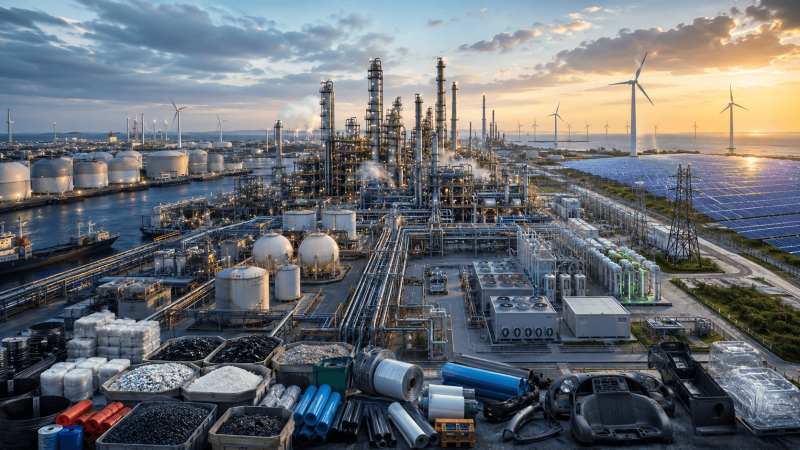
The global petrochemical market in 2026 faces an unusual contradiction: excess production capacity alongside regional supply shortages.
How can the world have too many petrochemicals and still struggle to get enough of them?
Imagine a world where petrochemical producers are struggling to sell their products, yet manufacturers thousands of kilometres away are desperately searching for reliable suppliers. Warehouses are holding excess inventory, while factories elsewhere face delivery delays, rising costs, and uncertainty.
It sounds impossible. But in 2026, this is precisely the contradiction confronting the global petrochemical industry.
The explanation reveals a fundamental reality of international commodity markets: having enough products worldwide does not necessarily mean having them where, when, and how they are needed.
The World Built More Than It Could Consume
For years, the petrochemical industry operated on a straightforward assumption: global demand would continue growing, and production capacity needed to expand accordingly.
China, the Middle East, and other major manufacturing regions invested heavily in new petrochemical facilities. Polyethylene (PE), polypropylene (PP), and other essential industrial materials became increasingly available.
But demand did not grow at the same pace.
According to ICIS, China planned to add approximately 6.2 million tonnes of polyethylene capacity and 4.55 million tonnes of polypropylene capacity in 2026 alone.
Meanwhile, slower manufacturing growth, cautious consumer spending, and weaker downstream demand prevented the market from absorbing all this additional capacity.
The result? Increasing competition, pressure on prices, and shrinking profit margins for producers.
Under normal circumstances, more supply should mean lower prices and greater availability.
So why are some buyers experiencing the exact opposite?
When Geography Becomes More Important Than Quantity
The answer lies in an uncomfortable truth about global trade.
A product sitting in a warehouse on the other side of the world is not necessarily an available product.
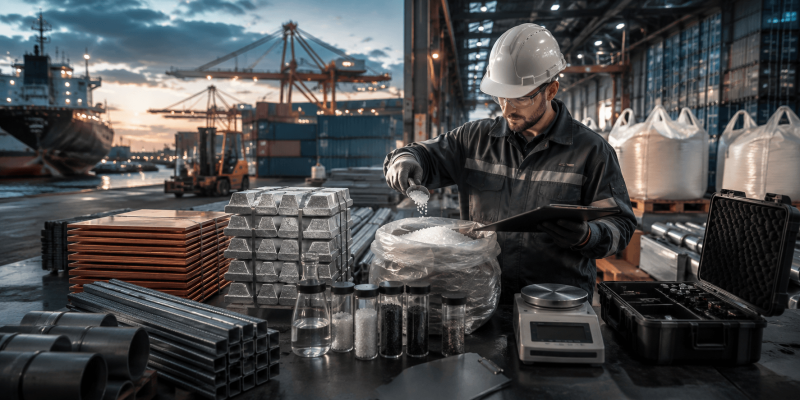
Petrochemicals depend on complex international supply chains connecting producers, refineries, shipping routes, ports, distributors, and manufacturers.
A disruption anywhere along that network can change market conditions almost overnight.
In 2026, geopolitical tensions and major shipping disruptions in the Middle East exposed this vulnerability.
The Strait of Hormuz, one of the world's most strategically important maritime passages, became a critical bottleneck for international trade.
According to S&P Global, the Middle East accounts for approximately 15% of global polyethylene production capacity. When transportation through the region was disrupted, buyers in import-dependent markets faced tightening supplies despite global production overcapacity.
In March 2026, polyethylene prices in India reportedly increased by approximately 43% following the outbreak of regional conflict.
Think about that for a moment.
The world had more production capacity than it could comfortably absorb, yet buyers in certain markets were suddenly paying significantly higher prices.
This is the petrochemical paradox in action: global oversupply and regional shortages existing simultaneously.
Not All Petrochemicals Are Interchangeable
There is another dimension to this contradiction that often goes unnoticed.
Even when petrochemical products are widely available, they may not meet a manufacturer's specific requirements.
Take polyethylene, for example.
High-density polyethylene (HDPE), low-density polyethylene (LDPE), and linear low-density polyethylene (LLDPE) belong to the same polymer family. However, their properties, processing characteristics, and industrial applications differ significantly.
A packaging manufacturer cannot necessarily replace a particular polymer grade with another simply because it is cheaper or more readily available.
The same principle applies to polypropylene, methanol, and numerous other industrial chemicals.
A surplus of one product does not automatically solve a shortage of another.
This explains why even apparently well-supplied markets can experience serious procurement challenges.
The Real Competitive Advantage Is Changing
For decades, price has been one of the dominant considerations in industrial commodity procurement.
But in an unpredictable global market, the cheapest offer is not always the most valuable.
A supplier offering an attractive price provides little benefit if delayed shipments cause manufacturing operations to stop.
Likewise, unexpected freight charges, insurance costs, and logistical disruptions can quickly eliminate the savings associated with a lower quotation.
Industrial buyers increasingly need to consider broader questions:
Can products be sourced from alternative markets? Are technical specifications consistent? How reliable are delivery commitments? What happens if an established shipping route becomes unavailable?
These questions are becoming central to procurement decisions.
As a result, reliable sourcing, diversified supplier networks, and international market knowledge are becoming competitive advantages in their own right.
What Does the Future Hold?
The petrochemical paradox is unlikely to disappear overnight.
Global production capacity continues to expand, while demand recovery remains uneven across different industries and regions.
At the same time, geopolitical uncertainty, feedstock availability, transportation costs, and changing trade flows can create sudden shortages in individual markets.
The industry may therefore continue experiencing periods of excess global supply alongside regional scarcity and unexpected price fluctuations.
For international traders and industrial buyers alike, success will increasingly depend on understanding these market differences and responding to them effectively.
Beyond Supply and Demand: The Importance of Global Connectivity
At Prime Petrochem, we recognize that international commodity trading involves more than simply identifying available products.
It requires understanding market dynamics, navigating complex supply chains, and connecting industrial buyers with suitable sourcing opportunities.
From polyethylene and polypropylene to methanol and other industrial commodities, our focus is on supporting international trade through market knowledge, commercial connections, and responsiveness to evolving customer requirements.
Because in a world where abundance and scarcity can exist at the same time, knowing where and how to source a product can be just as important as knowing its price.
The defining question of 2026 is no longer simply whether the world has enough petrochemicals. It is whether global trade can deliver them where they are needed most.