The Fertilizer in Your Fuel Tank: How Urea Keeps Both Farms and Trucks Moving
Urea feeds crops and cleans diesel exhaust. This 2026 guide explains how fertilizer and AdBlue-grade urea differ, what ISO 22241 demands, why the Hormuz crisis hit both markets, and how buyers should source urea in bulk.

Somewhere on a highway tonight, a truck driver will pull into a fuel station and fill two tanks. One takes diesel. The other, behind a small blue cap, takes a clear liquid that is roughly one-third fertilizer.
That liquid is diesel exhaust fluid (DEF), sold under the AdBlue brand in many markets. Its active ingredient is urea, the same white granule that farmers spread on wheat, rice and corn fields around the world. This means a farmer in Brazil and a logistics company in Europe are, in a very real sense, buying from the same supply chain. In 2026 that link became impossible to ignore.
One molecule, two very different jobs
Urea is made by combining ammonia with carbon dioxide, and the ammonia is made from natural gas. The result is the world's most widely used nitrogen fertilizer, containing about 46% nitrogen.
In a diesel engine, urea does a completely different job. Modern trucks, buses, tractors and many larger diesel cars use selective catalytic reduction (SCR). The vehicle sprays DEF into the hot exhaust, where the urea breaks down into ammonia. That ammonia converts harmful nitrogen oxides (NOx) into harmless nitrogen and water vapour.
The chemistry is the same; the purity requirement is not. And that difference is where most buying mistakes happen.
Fertilizer urea vs AdBlue-grade urea: why the grade matters
DEF is a solution of 32.5% urea in demineralised water, defined by the international standard ISO 22241 (the solution is also called AUS 32). The standard is strict, because an SCR catalyst is easily poisoned. A few of its limits:
|
Parameter |
ISO 22241 limit for AUS 32 solution |
|---|---|
|
Urea content |
31.8–33.2% by mass |
|
Biuret |
max 0.3% |
|
Aldehydes |
max 5 mg/kg |
|
Insoluble matter |
max 20 mg/kg |
|
Phosphate, calcium, iron and other metals |
max 0.2–0.5 mg/kg each |
These limits explain why ordinary fertilizer urea usually cannot be used to make DEF:
- Anti-caking coatings. Fertilizer urea is often treated with formaldehyde-based additives so it flows freely in storage. ISO 22241 requires urea free of aldehydes and anti-caking agents, so a coated product fails at once.
- Biuret. Biuret forms when urea is overheated during production. The solution limit of 0.3% means the solid urea must contain no more than about 0.9% biuret before dissolving (0.3 ÷ 0.325). That is why buyers of technical grade urea for AdBlue specify "low-biuret" product.
- Trace metals and insolubles. Metal contamination of a fraction of a part per million is enough to fail the standard. That rules out product stored or handled carelessly, even if it left the plant clean.
The arithmetic of DEF production is simple: one tonne of urea makes about 3.1 tonnes of AUS 32, or roughly 2,800 litres. For a DEF blender, the quality of every tonne of solid urea is multiplied three times over.
Granular vs prilled urea: does the form matter?
Urea comes in two physical forms:
- Granular urea has larger, harder particles. It stores and spreads well, and it is the main form in the international fertilizer trade, quoted daily at benchmarks such as FOB Middle East, Egypt and the Baltic.
- Prilled urea is formed by dropping molten urea through a tall tower. The particles are smaller and softer, and dissolve quickly.
For fertilizer, the choice depends on how the product will be spread and blended. For DEF and other industrial uses, what matters is the specification (biuret, aldehydes, metals, coating), not whether the product is granular or prilled. Always ask for the certificate of analysis rather than relying on the product name.
2026: the year the two markets collided
The Middle East is one of the world's most important urea suppliers. The World Bank estimates the region accounts for nearly a quarter of global urea exports. Analysts at Kpler estimate that about 40% of the world's seaborne urea trade passes through the Strait of Hormuz.
When shipping through Hormuz was disrupted from March 2026, the effect was immediate:
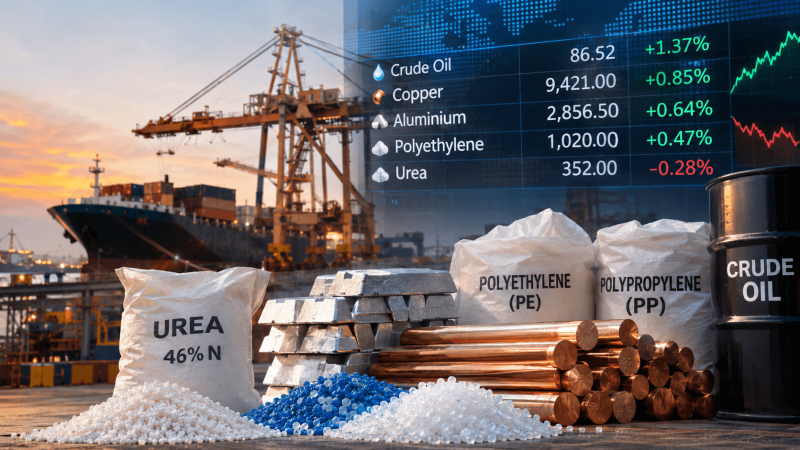
- Prices more than doubled. According to the WTO, urea reached about USD 850 per tonne in April 2026. The World Bank projects urea prices to average nearly 60% higher for 2026 as a whole.
- Fleets felt it, not just farmers. In March, India's vehicle makers warned that they had no clear visibility of industrial-grade urea supply beyond early April. Without it, modern buses and heavy diesel vehicles cannot legally or reliably run.
- The market reorganised. Buyers turned to other origins, such as North Africa, Southeast Asia, the Baltic and China, and some Gulf cargoes moved through alternative ports and land routes.
Prices have since come well down from the April peak, but the market is still unsettled. In early November 2026, granular urea was assessed at around USD 440 per tonne FOB Middle East. Egyptian urea was fetching about USD 535 FOB after gas supplies to local fertilizer plants were cut by 20%.
This is not the first time. In 2021, China restricted urea exports, causing acute AdBlue shortages in South Korea and Australia. In Germany, the wholesale price of AdBlue more than tripled within a year. The lesson is the same both times: DEF security depends on fertilizer markets, and fertilizer markets depend on natural gas and a handful of shipping routes. (We explored this chain reaction in The Commodity Domino Effect.)
What a running-out-of-DEF moment really means
For a farmer, a urea shortage means lower yields months later. For a fleet operator, a DEF shortage hits within days. When the DEF tank runs dry, SCR-equipped engines are designed to reduce power sharply, and many vehicles limit speed or refuse to restart until the tank is refilled. A transport company can have fuel, drivers and orders, and still be stranded.
This is why DEF producers, fuel distributors, mining companies and large fleets increasingly treat urea as a strategic input rather than a commodity they simply buy at spot.
How to buy urea in bulk without nasty surprises
Whether you need fertilizer urea for distribution or industrial urea for DEF production, resins or chemical processing, the same checks protect you:
- Name the grade precisely. Fertilizer grade (46% N, granular or prilled) and technical or AdBlue grade are different products with different prices. State the intended use in the enquiry.
- Write the specification into the contract. For AdBlue-grade urea, include biuret, aldehydes, coating (none), moisture, insolubles and trace metals, with limits that let your finished solution meet ISO 22241.
- Insist on documents and inspection. Ask for a certificate of analysis (COA), safety data sheet and independent inspection at loading. Our guide to commodity quality control before shipment covers this step by step.
- Choose packaging and terms to suit the use. Bulk vessels suit fertilizer distribution; bagged or big-bag deliveries are common for technical grades. Agree FOB, CFR or CIF terms clearly.
- Diversify origins. 2026 showed how quickly one route can close. Having approved alternatives from more than one region, such as the Middle East, North Africa and the Black Sea, is cheap insurance.
- Watch the benchmarks. Daily FOB assessments for the Middle East, Egypt and the Baltic show where the market is heading. Natural gas prices and shipping news through Hormuz are the best early warnings.
How Prime Petrochem can help
Prime Petrochem supplies both fertilizer-grade and industrial-grade urea from established producers, together with related nitrogen and sulphur products. From specification and supplier qualification to inspection, documentation and international shipping, we help agricultural distributors, DEF manufacturers and industrial buyers secure the right grade at the right time.
Looking for a reliable urea supplier from Dubai for your next shipment? Send us your grade, volume, packaging and destination, and our team will come back with available options.